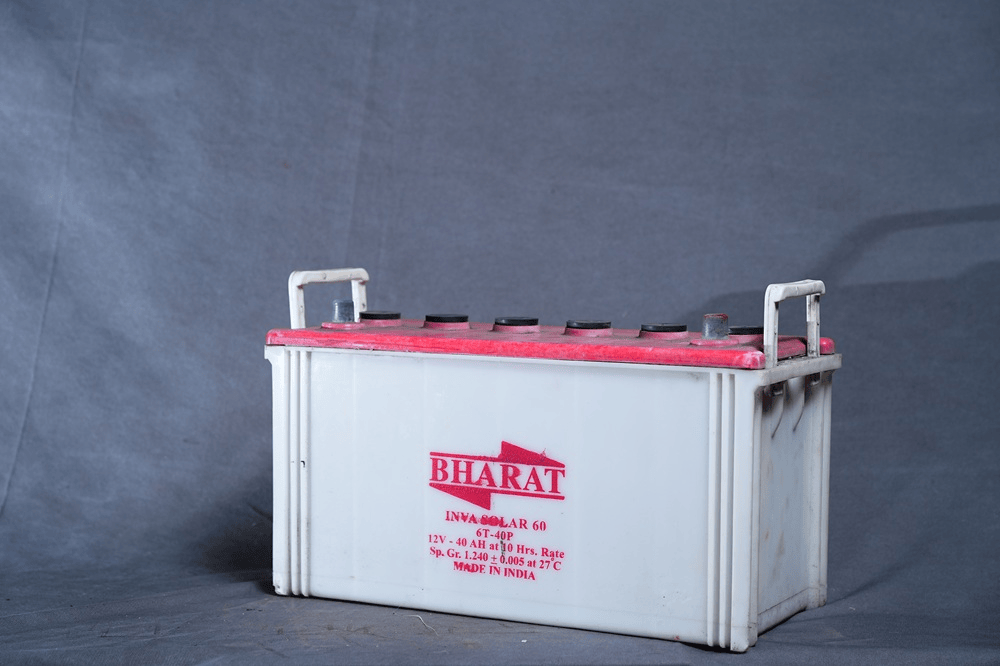
BATTERY 8V
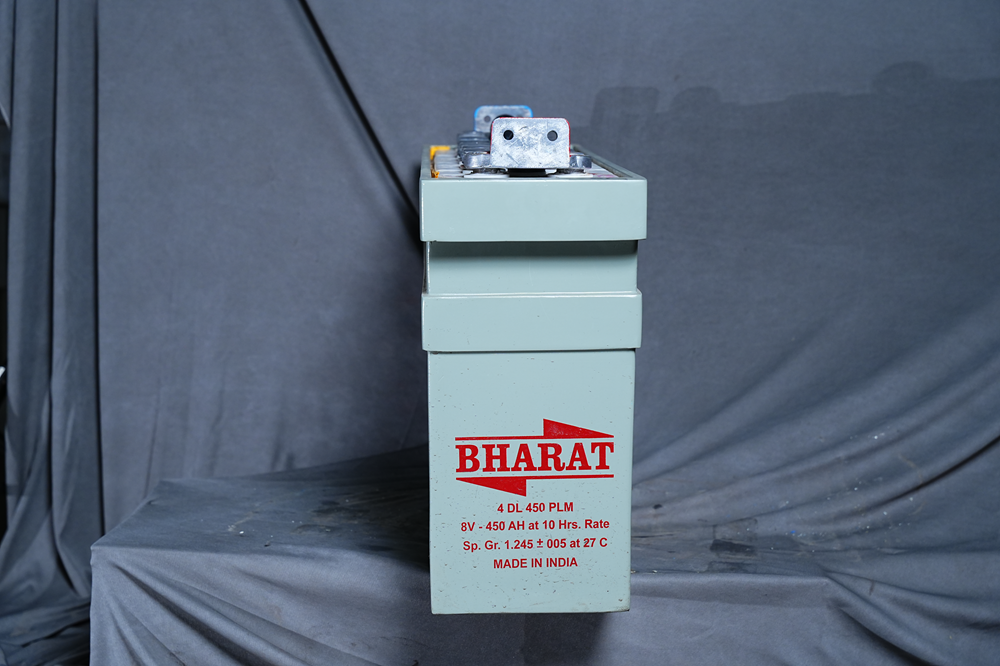
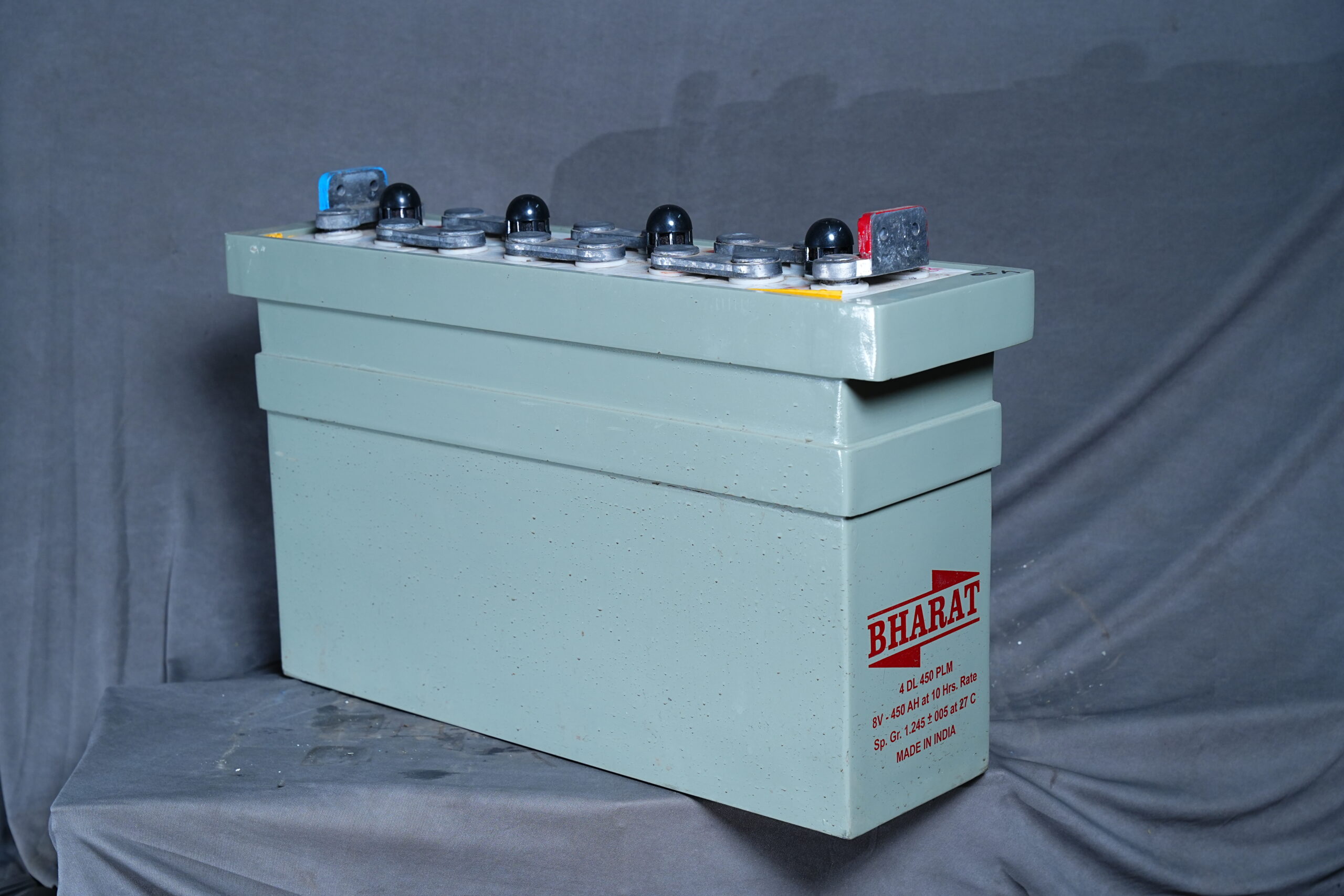
BHARAT 8V450 Ah
The BHARAT 8-volt Diesel Locomotive Battery unit is a rechargeable lead-acid type designed with positive plates of tubular construction. The positive plates are made from hydraulically moulded Selenium–Antimonial Lead spines, enclosed in multi-tubular bags made of inert synthetic fibre yarn. These bags are filled with high-purity lead sub-oxide powder and sealed at the bottom with a moulded plastic sealer.
This robust construction effectively prevents the shedding of active material during operation, ensuring long service life even under the most demanding conditions.
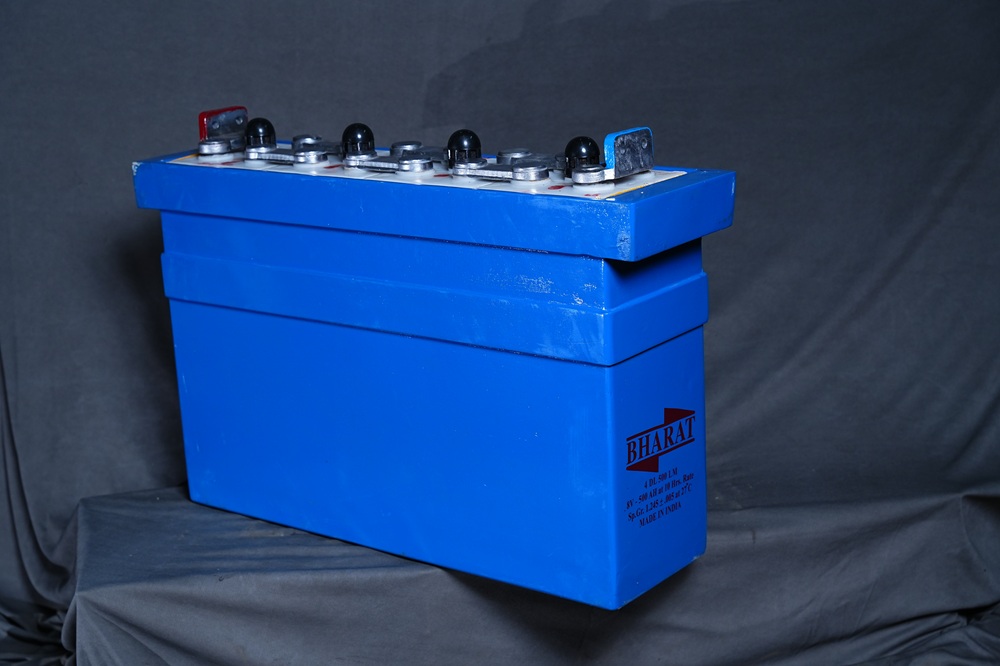
BHARAT 8V500 Ah
The Separators are Micro porous P.E Leaf highly resistant to battery Acid preventing physical
contact between POS. & NEG. plates but allowing free flow of electrical current and each cell
provided with one Micro porous Ceramic vent-cum-filling Containers and covers are moulded in
PPCP conform to IS:1146-1988 and arranged to hold the elements firmly and housed in FRP Tray.
These Lead Acid Storage batteries are specially
made for Indian Railways used as a source of
energy for starting diesel engines, lighting & other
normal auxiliary purposes in Diesel Locomotives
along with Power Car & Tower Wagon.
BHARAT 8V290 Ah
Lead Acid Cell is an electrochemical device
for storing energy in chemical form so that it can be released as electricity. However, they
can not became active until they are covered by water solution of sulphuric acid called ELECTROLYTE. The sulphuric acid of the lectrolyte supplies the sulphation which takes place within the plate material and releases electrical energy. This electrolyte is also carrier for electric current between POS. and NEG.
plates through separators. The Lead alloy of plates carries the electric current to and from plates to terminals. Sulphuric Acid bears a quantitative relation to electricity output of any
cell. Its purity and density plays very important role in the activation and performance of cell or battery i.e. number of cell connected together to increase volts or amps or both.
Protection
Care should be taken that the electrolyte temperature while cells are being charged does not exceed 45 Celsius better to reduce charging rate to half when electrolyte temperature reaches 35 C and even if there is tendency of electrolyte temperature to rise stop charging temporarily to resume charging when the cells have cooled down near ambient. If facilities are available, cell may be cooled externally by fan or keeping them partly immersed in cold water in hot summer months where ambient temperature is high. In such cases charging time will have to be prolonged proportionally to compensate low rate or idle hours.
During charging electrolyte should be maintained at correct level by adding Distilled water at least once in 24 hrs