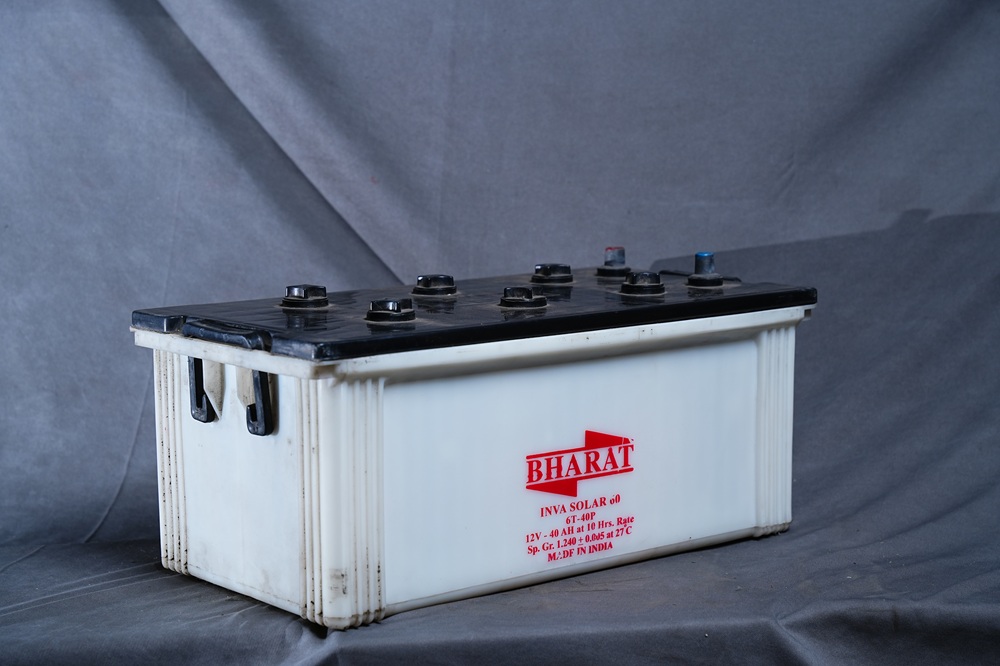
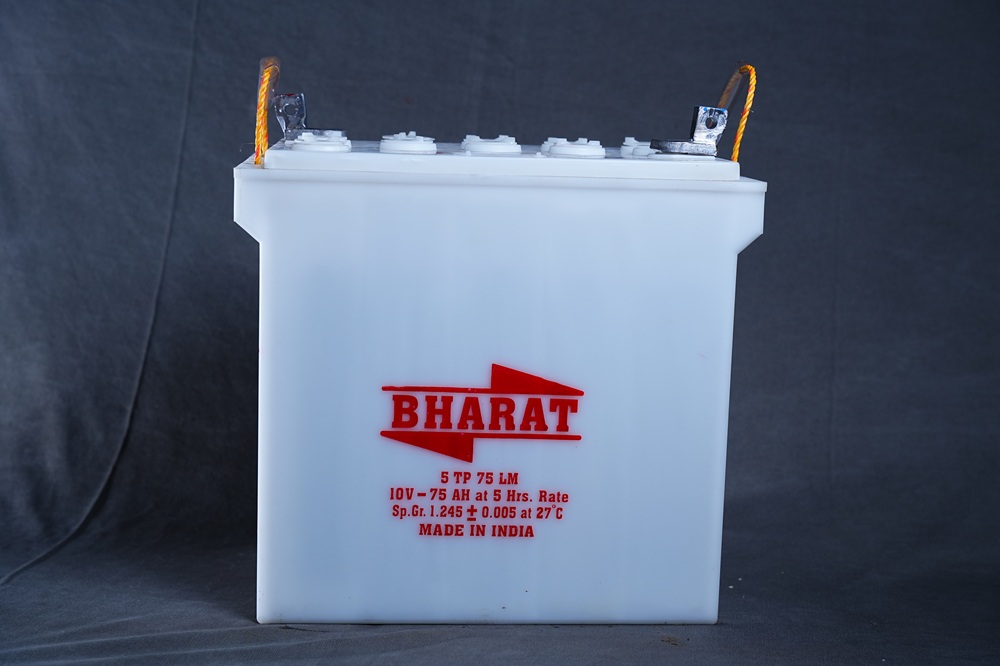
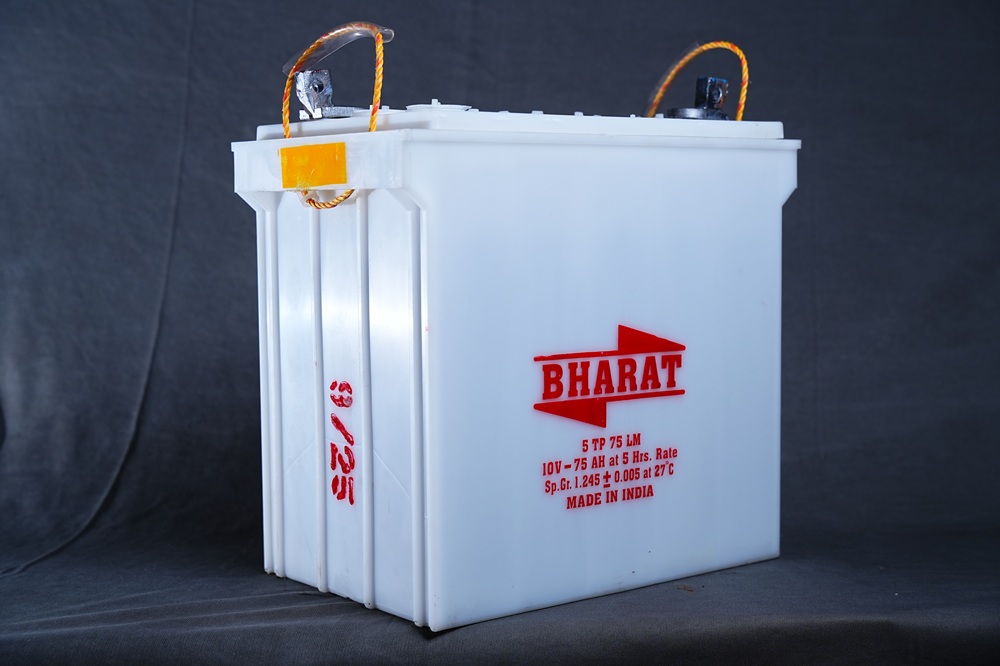
BATTERY 10V
Bench Charges
Charge at the normal rate given in the table and continue charging until the voltage and the specific gravity of the electrolyte in each cell reach their maximum values and show no further increase over three consecutive hourly readings. All cells should be gassing freely, and the expected top-of-charge voltage should exceed 2.7 V per cell (v.p.c.).
It is possible to begin a bench charge at a higher current (up to double the value specified) to reduce the overall charging time. However, the current must be reduced to the normal charging rate once gassing starts (i.e., at approximately 2.35 volts per cell).
Temperature
The maximum permissible operating temperature of the battery is 54°C. If this temperature is exceeded frequently, or for an extended duration, the battery’s lifespan may be reduced. Note that this refers to the electrolyte temperature, not the ambient temperature.
Temperature Correction
All specific gravity readings must be corrected to 27°C.
- For every 10°C above 27°C, add 7 points (0.007) to the hydrometer reading.
- For every 10°C below 27°C, subtract 7 points (0.007) from the hydrometer reading.
CAPACITIES
As per RDSO specs. PE-EMU/SPEC/0014-2000 (Rev-0) amendent 1&2/Latest
|
Type 5EMU 90TP-LM
|
Capacity at 5-h rateAh
|
Dimensions (max.)
|
Weight with electrolyte (approx.) Kg
|
Approx volume filling in acid (1.230) litres
|
Charging Currents
|
|||
|---|---|---|---|---|---|---|---|---|
|
L mm
|
W mm
|
H upto take offs mm
|
Initial charge A
|
Normal charge A
|
||||
|
90
|
353
|
215
|
360
|
40
|
13.5
|
5.4 amp for 75 Hrs.
|
9 amp for 15 Hrs.
|
|
LOW MAINTENANCE ELECTRIC LOCO/E.M.U. COACH BATTERIES
As per RDSO specs. PE-EMU/SPEC/0014-2000 (Rev-0) amendent 1&2/Latest
| . | Type | 90Ah |
|---|---|---|
| Make | The Bharat Battery | |
| Type of unit | 10 V 75 Ah | |
| Monobloc | ||
| Manufacturer's nomenclature | 5EMU 90TPLM | |
| Overall dimensions of unit (approx.) | ||
| L | 353±2 mm | |
| W | 215±2 mm | |
| H (upto terminal top) | 360±3 mm | |
| Weight per unit with electrolyte (approx.) | 40±5% Kg. | |
| Cell container material | PPCP | |
| Type of positive plates | Tubular Gauntlet | |
| Type of negative plates | Flat, pasted | |
| Type of separators | Microporous | |
| PE envelope | ||
| Max. electrolyte temperature that the cell/battery can withstand without any damage | ||
| (1) Continuously | 50°C | |
| (2) For short periods | 55°C | |
| Electrolyte height above the top of the separators | 90 mm | |
| Clearance between plates and bottom of the container | 11 mm | |
| Quantity of electrolyte per unit | 13.5 litres | |
| Sp. gr. of electrolyte for initial filling at 27°C | 1.215 ±0.005 | |
| Details of initital treatment recommended | 5.4 amp for 75 hrs | |
| Material of terminal take-off and intercell connectors | Antimonial lead | |
| Material of interunit connectors | Flexible copper cable, insulated | |
| Normal charging rate | 9.0 Amps for 15 hrs. | |
| upto 2.75 vpc |
SCHEDULE OF PERFORMANCE TYPE TEST
| . | Type | 90Ah |
|---|---|---|
| Ah. capacity at 5 h rate of discharge to 1.75 V per cell at 1.250, 27°C (Ah) | 90 | |
| Ah efficiency (%) | 97 | |
| Wh efficiency (%) | 83 | |
| Retention of charge - Loss over 28 days (%) | 4.5 max | |
| Life test - life units (mn) | 15 | |
| Max. period of dry storage (months) | 24 |
How to ascertain state of discharge
The specific gravity of the electrolyte gives a direct indication of the state of discharge of the battery. The table given below shows the specific gravity at various stages discharge, after correction to 27°C.
Cell condition against specific gravity at various stages of discharge
- Fully Charged - 1.245 ± 0.005
- 50% discharged - 1.210 ± 0.005
- Fully discharged - 1.180 ± 0.005